Monday, 10 June 2013

Vencer Sarthe super car can be admired in Salon Privé

Salon Privé confirms Dutch super car manufacturer Vencer will reveal the Sarthe to the UK for the first time in the stunning grounds of Syon House. 
Vencer was established in 2012 by Robert Cobben and is based in Vriezenveen. The first Vencer is the Sarthe, which had its world premiere in Monaco in April and Salon Privé is delighted to host it’s UK reveal.
The Sarthe is a low volume exclusively handmade mid-engine sports car which utilises a hybrid space frame chassis, made of high grade tubular steel, with chrome-molybdenum safety structure and rear sub-frame with the floor made up of an aluminium honeycomb structure. This combination of materials and techniques results in a lightweight, super strong and rigid chassis.
The 8-cylinder engine is placed behind the driver, in a mid-engine configuration. The engine is directly bolted onto the 6-speed MT gearbox. Due to this configuration the car has a very balanced weight distribution of 45% front and 55% at the rear.
The Vencer “double wishbone” ensures a pure and direct vehicle control without additional electronic interference. Only ABS and EBD are present to properly support the driver in difficult and unsafe situations.
To ensure a comfortable and optimal driving experience, the Sarthe is equipped with an efficient climate control system. Electric windows, in-car entertainment, central locking, and alarm as standard.  However, upon customer requests the car can be equipped with additional features.

Mia EV's coming to UK this summer

A brand new electric vehicle is coming to the UK fleet market from this summer, thanks to a new, official import deal struck for the Mia-Electric range of electric vehicles.
Mia-Electric is a specialist, dedicated EV vehicle manufacturer, producing both car and CV bodystyles, offered on a common chassis and drivetrain and designed specifically for urban environments.  All vehicles are produced in France, at the former Heuliez factory in Cerizay, and are already on sale across Europe.
Designed to put the ‘fun’ into functional, all Mia-Electric vehicles are bespoke EVs, designed for the city and offering a central driving position, sliding doors, a cut-out floor and roof and ABS body panels.
Each is driven by two Lithium Ion Phosphate (LiFePO4) batteries, generating 12 kW, a stable chemistry giving a range of up to 74 miles and recharging fully in 5 hours.  Batteries can be charged at any time, with a 10-minute charge providing a 5-mile range.
The official British Mia-Electric importers will be Venture Automotive Holdings Ltd, trading as ‘Mia-Electric UK’.  The company will target business drivers and fleet operators initially, based on the vehicle’s obvious economic and environmental advantages, in urban and return-to-base, delivery use.
“There is a very real and practical place for EVs in the UK vehicle market,” explains Venture Automotive Holdings’ MD, Paul Evans, “but, we are realistic in the best place for them.  Urban environments, short journeys and regular return-to-base delivery fleets are ideal for electric vehicles.  That’s where the cost per mile and zero emissions benefits are greatest and what Mia is designed for.”
Mia-Electric’s launch to the UK fleet market will coincide with revisions to the London Congestion Charge in July, which will see only vehicles emitting 75 g/km CO2 exempt from the charge – something only attainable currently by plug-in hybrid and fully electric vehicles.
Mia-Electric vehicles will be offered with a ‘Peace of Mind’ programme, comprising a five year/ 70,000-mile warranty for vehicle, battery, electric drivetrain and anti-corrosion and roadside assistance.
Prices will start from £16,995 + VAT, on-the-road, including the UK Government’s Plug-In Car Grant.

Sunday, 9 June 2013

3-D printing used to model design changes in 2014 Chevrolet Malibu

When Chevrolet set out to refresh the Malibu’s interior and exterior for 2014, designers used one of the most cost-effective and time-saving methods in its high-tech tool box: rapid prototyping, also known as 3-D printing.
The processes literally grow prototype parts out of powder or liquid resin at a fraction of the cost associated with building tools to make test parts. Selective laser sintering and stereo lithography – the official names of the processes – helped accelerate Malibu’s development and evaluation. Both processes use specialized software, math data and digital lasers, which accomplish in days what would have taken weeks of clay sculpting in the past.
Rapid prototyping enables designers and engineers to quickly see, touch and test versions of individual components and systems in precise one-third scale and full-size models without having to make changes to production tooling, which can cost hundreds of thousands of dollars.
“When you need to get intricate, fully functional prototype parts quickly, nothing beats rapid prototyping,” said Todd Pawlik, chief engineer, Chevrolet mid- and full-size cars. “Our ability to rapidly fabricate inexpensive prototype parts throughout a vehicle enables key components to get confirmed earlier so that we can go from computer models to production-caliber parts.”  
Rapid prototyping proved particularly useful for updates to the new Malibu’s floor console, which now features a pair of integrated smartphone holders for driver and passenger. The new console also weighs less, which helps contribute to the Malibu’s improved fuel economy.
In addition, the Malibu development team used rapid prototyping to:
  • Update the center stack trim and evaluate various surface treatments for the console and center stack
  • Create a prototype of Malibu’s redesigned front fascia, enabling aerodynamic and climatic wind tunnel testing without expensive production parts.
  • Re-sculpt the front seat back panels – located between seat frame and upholstery – for improved rear seat access and passenger comfort. The 2014 model has 1.25 inches more knee room compared to its predecessor.
Here’s how rapid prototyping works:
Selective laser sintering fuses plastic, metal, ceramic or glass powders in cross sections. A laser scans a pattern on the surface of the powder, fusing the particles together into a layer four-thousandths of an inch thick. As each new layer of powder is added, scanned and fused to the previous one, the part gradually takes shape within the 28-inch-cubed reservoir. 
Stereo lithography combines photochemistry and laser technology to build parts from liquid photopolymer resins. The parts are also built up in layers as a UV laser traces the section onto the surface of the resin, curing the liquid into a solid as it scans. Because the resin won’t support the parts being formed, a fine lattice-like structure is generated below each part during the manufacturing process.

Friday, 7 June 2013

Passat TDI attempts Guinness World Record

Volkswagen of America announced today that it will challenge the existing Guinness World Records achievement for the “lowest fuel consumption—48 U.S. states for a non-hybrid car.” Two drivers will pilot a 2013 Passat TDI Clean Diesel, leaving from and returning to Volkswagen’s Herndon, Va. headquarters. This 8,000-mile, 48 contiguous state drive entails traveling west along a southerly route and circling back via a northerly one for approximately two weeks. The drivers will stop at various points along the way and will share their experiences through Volkswagen’s social media channels: @VW, #VWTDI, and www.facebook.com/VW.

The 2013 Passat TDI uses Volkswagen’s advanced turbocharged and direct-injection Clean Diesel engine to achieve EPA estimated highway fuel economy of 43 miles per gallon when equipped with the six-speed manual transmission. This enables the Passat TDI to go up to 795 highway miles before needing to refuel.

Wayne Gerdes, founder of cleanmpg.com—an online community dedicated to raising fuel economy and lowering emissions—will be the primary driver. Automotive journalist Gerdes has made a career out of hypermiling and has set mileage records in more than 100 vehicles, as well as achieving the record for lowest fuel consumption in the lower 48 U.S. states with a hybrid vehicle. He will be accompanied by Bob Winger, an electronics engineer long involved in energy and conservation projects. “It’s going to be a great adventure and I’m confident we can improve upon the current record of 67.9 mpg in the fuel-efficient Passat TDI,” Gerdes said.

The Passat TDI Clean Diesel departed from Volkswagen of America’s headquarters on Friday, June 7th, at 12:00 p.m. Herndon Mayor Lisa C. Merkel officiated at the opening ceremony to certify that Guinness World Records guidelines were followed correctly.

David Geanacopoulos, Executive Vice President for Public Affairs and General Counsel of Volkswagen Group of America, said: “This is a fun and exciting way for Volkswagen to demonstrate the efficiency advantages of diesel technology. The Passat TDI is a remarkable car and we think it has a good chance to beat the existing world record. We are also very proud that the Passat TDI is one of seven vehicles in the current Volkswagen lineup that have an EPA fuel economy rating of 40 mpg or better on the highway.”

Clean Diesel engines are just one part of Volkswagen’s approach to sustainable mobility, encapsulated by the Think Blue philosophy. Volkswagen employs a wide range of powertrains—diesel, electric, hybrid, and intelligently downsized turbocharged gasoline engines—in its quest to be among the most eco-conscious automakers in the world. That approach extends to the factories in which the cars are built and the processes by which they are made.

For the attempt, the Passat TDI will use Shell ultra-low-sulfur diesel fuel, available at nearly 8,000 Shell stations nationwide, and Continental PureContact with EcoPlus Technology tires, which have Tg-F polymers to help reduce rolling resistance and improve fuel efficiency. The record-seeking Passat TDI has been equipped with a Linear Logic ScanGauge II to precisely measure fuel economy and a Droid RAZR MAXX HD by Motorola smartphone to provide Guinness World Records tracking requirements and long-lasting connectivity.

Acura Special Edition debuts in U.S.


The new 2013 Acura TL Special Edition is now on sale with a manufacturer's suggested retail price (MSRP) of $37,405. Joining the TL line as a mid-2013 model, the TL Special Edition offers a step up from the standard TL, with the addition of highly desirable feature upgrades, creating an incredible value in the luxury four-door sedan segment.

The front-wheel-drive TL Special Edition features distinctive 10-spoke, 18-inch alloy wheels, a color-matched deck lid spoiler and trunk-mounted Special Edition badging. Standard keyless access with pushbutton start adds convenience and ease of use. The TL Special Edition is available in four exterior colors: Bellanova White Pearl, Crystal Black Pearl, Graphite Luster Metallic and Silver Moon Metallic. All exterior colors are matched with a leather-appointed Ebony interior with contrast stitching.


Keyless Access System

The TL Special Edition's standard Keyless Access System lets the driver enter and drive the car without having to handle a key or fob. The Keyless Access Remote has a unique digital identity that is automatically communicated to the car; the driver simply pulls one of the front door handles while the remote in his/her possession and the door unlocks and opens. When carrying the fob (or if all doors are unlocked), the trunk can be opened by pressing a button located on the TL Special Edition's rear spoiler.


The system identifies which of the two supplied fobs is in use each time the driver's door is opened (even if it is already unlocked), and then automatically sets the driver's seat, steering wheel, outside mirrors, climate control and audio system (including audio system presets) to a profile preset by the driver using that fob.

Once the driver has opened the door and is seated, the Keyless Access System allows the TL to be started with a push of the Engine Start/Stop button positioned on the instrument panel. When leaving the car, a press of the soft-touch button on the outside of the door handle locks all doors. Alternatively, a press of the Lock button on the Keyless Access Remote will also simultaneously lock all doors. The Keyless Access System will not allow the transmitter fob to be locked in the interior or the trunk of the TL.


Powertrain

The front-wheel drive TL Special Edition features an all-aluminum 3.5-liter V-6 with single overhead camshaft cylinder heads and 24 valves, with the intake valves actuated by Acura's VTEC® (Variable Valve Timing and Lift Electronic Control®) system. This compact and efficient engine produces 280 horsepower and 254 lbs-ft of torque (SAE net). A Sequential SportShift 6-speed automatic transmission operated by a straight-gate style console-mounted shifter is standard. For more spirited driving, a racing-inspired steering wheel paddle shifter system is standard and works when the transmission is in "Drive" or "Sport."


Interior

The 2013 TL Special Edition's interior exemplifies Acura's driver-oriented sport-sedan thinking, matched with outstanding luxury. Sweeping shapes and high-quality materials blend a luxury aesthetic with a feeling of advanced technology. A 10-way adjustable power driver's seat and an 8-way adjustable power front passenger's seat are standard. A power moonroof, 276-watt audio system with eight speakers, and dual-zone, dual-mode automatic climate control system with automatic humidity control are also standard. The 2013 TL Special Edition comes well-equipped with standard technology features including a Bluetooth® HandsFreeLink® wireless telephone interface, USB port connectivity, and a high-resolution Multi-Information Display (MID) on the center cluster.


Safety

Standard safety equipment on all Acura models includes Vehicle Stability Assist™ (VSA®) with traction control, ABS, dual-stage/multiple-threshold front airbags, front-side airbags, side curtain airbags for all outboard seating positions, front seatbelts with automatic tensioning system and load limiters, Tire Pressure Monitoring System (TPMS) and Daytime Running Lights (DRL).

The TL recently earned the top-level rating of TOP SAFETY PICK+ from the Insurance Institute for Highway Safety (IIHS), including a GOOD rating in the IIHS' new small overlap frontal barrier crash test. The new IIHS small overlap frontal barrier crash test is designed to simulate a collision between a vehicle traveling 40 miles per hour and a fixed object, such as a utility pole, where only 25-percent of the vehicle's front structure is engaged by the opposing object. According to a 2009 study by the IIHS, such small overlap crashes accounted for nearly 25-percent of frontal crashes resulting in a serious injury or fatality.

The 2013 TL SE is produced using domestically and globally sourced parts at Honda of America Mfg., Inc., in Marysville , Ohio, recipient of the J.D. Power and Associates' Silver Plant Quality Award in its 2012 Initial Quality Study.
TRIMMSRP*EPA Fuel Economy Rating**
TL$35,90520/29/23
TL Special Edition$37,40520/29/23
TL with Technology Package$39,63520/29/23
TL with Advance Package$41,83520/29/23
TL SH-AWD$39,45518/26/21
TL SH-AWD with Technology Package$43,18518/26/21
TL SH-AWD with Advance Package$45,38518/26/21
TL SH-AWD 6-Speed Manual with Technology Package$43,18517/25/20

81-year old Gerry Crown leading Peking to Paris Rally as it enters Russia

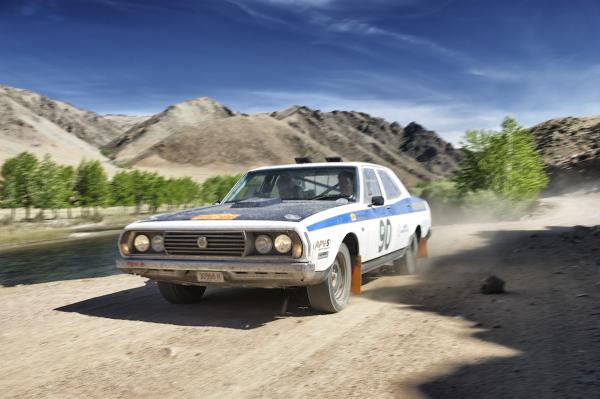
This year’s Peking to Paris Rally has a real fight on its hands as two Australian crews are battling it out for the top spot in the Classics division. 81-year-old Gerry Crown and his teammate Matt Bryson are hanging on to their lead in the 1973 Leyland P76 with the ex-1974 World Cup Rally winning Citroen DS23, driven by Robbie Sherrard and Peter Washington, fighting to close the gap.
The Leyland has an overall total of 78h 13m 12s with the Citroen just over four minutes behind with a total of 78h 17m 31s. Current standings have seen Gerry winning nine trials to Robbie’s four. But it’s still all to play for with 23 days of competition remaining.
With the drivers’ facing new challenges every day – be it mechanical or environmental – the rest of the top five should not be counted out of the running yet either. Peter Lovett and Tim Smith are currently in third place in their 1965 Porsche 911, with over 16 minutes separating them from the top two. Fourth is the 1970 Beetle of American’s John and Brett Layzell, a further 16 minutes adrift, with the 1968 Datsun P510 of Paul and Mariella Kirkham holding on to fifth place.
In the Vintageants group of pre-war cars, there has been a complete turnaround in the standings with mechanical issues forcing the early leader further down the results. The British team of Phil Garratt and Kieron Brown are in the lead with their red 1937 Chevy Fangio Coupe with a total of 87h 7m 39s. New Zealanders Bruce and Ben Washington sit in second place with their 1929 Chrysler 75 Roadster, with a gap of over 38 minutes, while Brits Bill Cleyndert and Mark Van Hees, in the 1929 Ford Model A Speedster, are in third.
There have been six cars that have been forced to leave the competition so far with another half dozen still trying to catch up after waiting for repairs and spares in the workshop.
The Volkswagen Beetle of Garrick Staples and Hayden Burvill was forced to retire after it rolled when hitting a sudden gully at speed. The 1929 Rolls Royce 20 of Dom Bernaz and Guido Somazzi and Jan Pettersson and Catherine Ockernah’s 1964 Mercury Park Lane has also had to call it a day.
Major mechanical issues have also caused the competition to say goodbye to the 1933 Delage D6 Tourer, driven by Jan De Clerck and Jan Imschoot, the 1927 Vauxhall 14/40 of Matthew Telling and Andrew Wyers, and Paul Darrouzet and Ian Brown’s 1928 Packard Phaeton.
The remaining competitors are in great spirits even if their cars have barely survived the grueling pace and sand storms of Mongolia. Everything from pieces of garden chain to Loctite glue has been used to keep the cars motoring towards the French capital.
With 19 Time Trials under their belts, over 3,500kms travelled through the remotest parts of Mongolia and having spent the past six nights under canvas, the entrants now face the new challenge of Russia as they drive from the Russian border to Voronezh and the Ukraine over the next eleven days. The entrants will also face their longest day of driving in Russia as they travel 668kms from Novosibirsk to Omsk.
For more results, rally reports and exclusive picture galleries of the Peking to Paris Rally and information on future Endurance Rally Association events, visit www.endurorally.com.

All-new Range Rover sets Pikes Peak Hill Climb record

The all-new Range Rover Sport yesterday established the record for a production-standard Sport Utility Vehicle and broke the long standing record for any kind of production-standard vehicle on the Pikes Pike International Hill Climb course,  venue of the spectacular annual competition known as ‘The Race To the Clouds’.
The Range Rover Sport rose to the challenge of the 12.42-mile asphalt course, powering its way from a standing start, in just 12 minutes 35.61 seconds – an average speed of 59.17 mph (95.23 km/h) on a snaking road that clings to the edge of the mountain with precipitous drops on one side and unyielding rock faces on the other. The record was independently timed and sanctioned by PPIHC (Pikes Peak International Hill Climb), organisers of the annual competition at the Colorado venue.  
The Pikes Peak course goes through 156 corners as it ascends beyond the treeline from 9,390 feet (2,860m) above sea level to 14,110 feet (4,300m). At that altitude the air contains only 58% of the oxygen it does at sea level, diminishing engine performance and blunting human physical and mental performance. 
The new record was set by a Range Rover Sport with a 510PS 5.0-litre supercharged petrol V8 engine, the vehicle altered from production specification only in the fitment of a roll cage and harness seatbelts to meet racing safety requirements.  
The Range Rover Sport was driven on the record run, by American competition and stunt driver Paul Dallenbach. Best known as a Pikes Peak specialist, Dallenbach, 45 years old, from Basalt in Colorado, has won his division at the Hill Climb six times and won the event outright three times.
Dallenbach said: “There’s no margin for error at Pikes Pike – you only need to misjudge one of those 156 turns and you’re into the trees or over the edge of the mountain. To take on this place the way I did today, you need complete confidence in your vehicle, and the Range Rover Sport sure gave me that – it’s fast, responsive and agile. I was able to place the car exactly where I wanted it on the road to keep to the optimum high-speed lines through corners. This is a hugely capable vehicle and I’m proud to have been part of demonstrating that by setting a new Pikes Peak record.”
The Pikes Peak record run is the first of a series of global driving challenges to be taken-on by the all-new Range Rover Sport, pushing the vehicle to new limits in a series of the most punishing drives to be found on earth.
Pikes Peak International Hill Climb
The Pikes Peak car and motorcycle hill climb competition is held annually on a 12.42-mile (19.99 km) section of the road that runs up to the summit of Pikes Peak mountain, 14 miles north-west of the town of Colorado Springs. The timed course starts at an altitude of 9,390 feet (2,860 metres) above sea level and rises 4,720 feet (1,440 metres) to 14,110 feet (4,300 metres).
First run in 1916, Pikes Peak is the USA’s second-oldest motorsport event. Some of America’s most famous racing drivers – Mario Andretti, Bobby Unser, Rick Mears, and Al Unser – have won the competition, as have internationally acclaimed rally drivers such as Michele Mouton, Ari Vatanen, Per Eklund and Stig Blomqvist.  The current outright course record is 9 minutes 46.164 seconds, set by Rhys Millen last year in the Time Attack division in a production-based but radically modified Hyundai Genesis Coupe.
All-New Range Rover Sport
Developed alongside the highly-acclaimed Range Rover, the all-new Range Rover Sport delivers the brand’s best-ever on-road dynamics together with class-leading, genuine Land Rover all-terrain capability, while presenting customers with a more assertive and muscular exterior, more luxurious interior and the flexibility provided by the option of occasional third row seating.
Exploiting Land Rover’s breakthrough lightweight suspension design and innovative dynamic chassis technologies, the All-New Range Rover Sport’s first-in-class aluminium architecture achieves a weight saving of more than 420kg.
Designed and engineered at Land Rover’s development centres in the UK, the new model will be produced in a state-of-the-art low-energy manufacturing facility at Solihull, UK.

Share

Twitter Delicious Facebook Digg Stumbleupon Favorites More